Hier ist im uebrigen eine englische Version des Textes ...
Okay, here's the English (and radically shortened) version of the original "Holy grail oder holy crap?"; article I wrote for the German Musikerboard.de forum a couple weeks ago.
Recently, I had published an article on the MB forum that dealt with upgrades that enhance the sonic and practical features of a Les Paul. People seem to have liked it quite a bit so I got asked to write another one. Being a Les Paul-maniac myself, I finally decided that it would be cool to do a comparison of a superb Gibson Historic Les Paul (my 2002 R8) with an original Les Paul from the glorious years 58-60. The main reason to do that was because it is almost impossible to get your hands on an original in Germany, so Les Paul fans eventually have to settle for articles and stories by people that have access to these most precious guitars.
Luckily, my friend Jay (the founder and owner) of Emerald City Guitars in Seattle owns two original Les Pauls and was kind enough to let me sit in with his beautiful early 1960 Standard. So I ended up engrossing half of his store with my Historic, recording tools, an old-fashioned notebook (yeah, sheets of paper, a pen … vintage-style, you name it!), a wonderful blackface
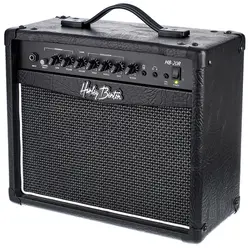
Fender* Vibrolux … and Alberta - serial number 0 0285 and a lot of stories to tell. Wow, this baby definitely had seen numerous stages, had gone through several beer showers (probably including the bottles), and - most important of all - had been rocked pretty hard in the last 52 years of her life. The red is almost completely gone, the color's somewhere between teaburst and amber. The whole guitar is covered with dings and dongs, a previously installed Bigsby has left some distinctive scars (now it is re-converted to the original tailpiece), and some parts had been lost and changed over the years. A note aside: even though the top shows a dominant fading, there's hardly any super-obvious checking (as found very often on aged reissues).
And who is the guy who rocked this guitar for years and years on stage and named her Alberta after all? His name is Flamin' Harry McGonigal. A little Google search helped me as a guy from the Westcoast and showed that Harry must have been (or probably still is) a big shot in the Eastcoast blues rock circuit. Rock 'n' Roll rowdy George Thorogood even called him the "most underrated guitar player in North America". One thing is clear - Harry must've loved heavy rings on his left hand and blues scale in A minor, since the back of the neck shows impressive grooves from the 5th to the 8th fret. When Joe Bonamassa (probably on his pursuit to one day own the biggest collection of bursts) was checking out Alberta recently, first thing he said was: "I'd have these grooves refilled immediately!"; And Joe wasn't the only guy who left some star-DNA on this guitar. Players like Rev. Billy G., Santana, John Mayer (who?), and others already played this particular Les Paul. No need to say that I was somewhat starstruck when Jay handed me Alberta and left me (and Wolfe Macleod - founder and mastermind of Wolfetone pickups) alone in the room.
Just a short note on my R8: It's a particularly nice model (the best Historic I've ever put hands on) which has seen several upgrades (correct 57s wiring, Cornell Dubilier Grey Tiger caps, Wolfetone Marshallhead MkII (bridge) and Dr. Vintage (neck) humbuckers, etc.) throughout the years.
Now to the evaluation: First (as I always do when I test a guitar) I check the unplugged sound of Alberta, and instantly felt sort of disappointed. The sound was thin, almost fragile, there was not much bass present, and sustain was not on the huge side. On the other hand, playing-wise, this guitar played like butter! Grooves in the neck? Heck, yeah! I felt them, but they really didn't influence my playing at all. The neck shape was very interesting, too, since it was quite different compared to some necks on current R0 models that I played recently. Alberta's neck almost has a soft v-shape, which felt fantastic. Gibson should scan this neck and use the dimensions sometime!
However, we were not happy with the unplugged sound and decided to plug that baby in (hey, it's an electric guitar which was meant to be plugged in!) … and good lord! Suddenly, the room was filled with the most beautiful, transparent, dynamic, and sweet sound one could imagine. These PAFs really injected some unexplainable magic into Alberta and literally woke the old lady up! Although the pickups show high readings (8.6 for the neck and 8.7 for the bridge) the sound was strong and clear and didn't push the
Fender* preamp into overdrive. The sound was more focused on a broad range of mids rather than on bass, the highs are abundant, but not piercing - the sound of a good old Telecaster bridge pickup instantly came to my mind (think Zep). Suddenly, all these explanations of THE PAF sound that I knew from the literature made sense. I think I mumbled something like "Aha, you really have to hear it to understand the hype."; I'm afraid that's how it is …
Then I plugged in my R8 (which sounded so much fuller, sustained almost twice as much, and had a much broader frequency range acoustically compared to the 60s) into the
Fender*, stroke the first chord … followed by a minute of complete speachlessness. Wolfe and I looked at each other, both of us not believing how incredibly close those two guitars sounded. Of course, the acoustic features of the R8 were transformed beautifully into the electric sound, which means that the R8 (named Naomi, by the way) sounded fuller, sustained longer. But the transparency and dynamics were also there. Probably not as magical as with the real PAFs, but still … very, very close. Jay calls these extremely fine differences in clarity and touch response the "expensive 5%";. We all know that from a certain (price-)point on, the quality of the sound does not increase linear with the money you have to pay to get there. And this is exactly, what the "expensive 5%"; mean. Monster players like Joe Bonamassa care about these 5%. They want to hear this tiny little extra that you cannot get from other (very good, though) guitars.
To name it - the 5% difference between these two guitars cost 170k dollars! THOSE are expensive 5%. Does the ambitious, but not really dedicated guitar player need to pay this premium? Obviously not! But for some player, these percent are the ones that count. So is it worth it? To some? Hell, sure it is. If I had the resources, I'd happily throw bundles of dollar bills at Jay until he gives up. But I don't.
Luckily, this test also showed that a current Historic model can reproduce the sound of the glorious Les Pauls as close as it gets. I've never been happier with my Naomi since then.
The only thing I wish for is that Alberta finds her way into the hands of a player who rocks the heck outta her! That's what she knows, that's what she does best. Don't let her sit in a stand for the rest of her life!
That was pretty much it … even though it's not a 1:1 translation, I think it captures what (Wolfe and) I felt on that day.


.
 Aber mal ganz ehrlich, beide Teile klingen extrem gut. Und wenn die R8 auch noch 10er D'Addario Nickel-wound anstelle von 11er Pure-Nickel Saiten drauf gehabt haette, waere der Unterschied wahrscheinlich nicht mehr zu hoeren gewesen.




 ! Und ich komm erst am Donnerstag heim
 ...


 !